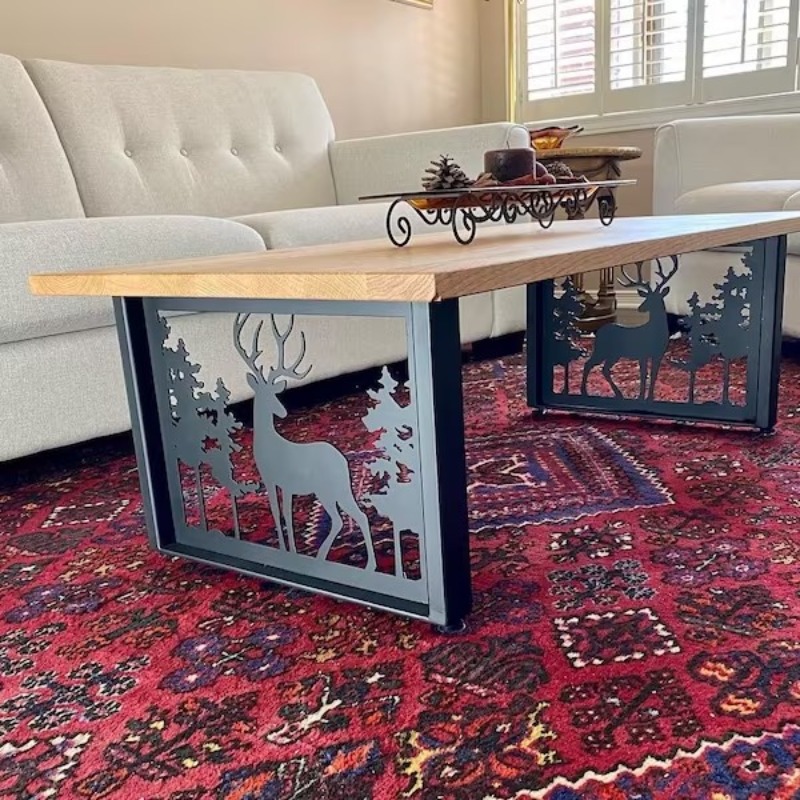
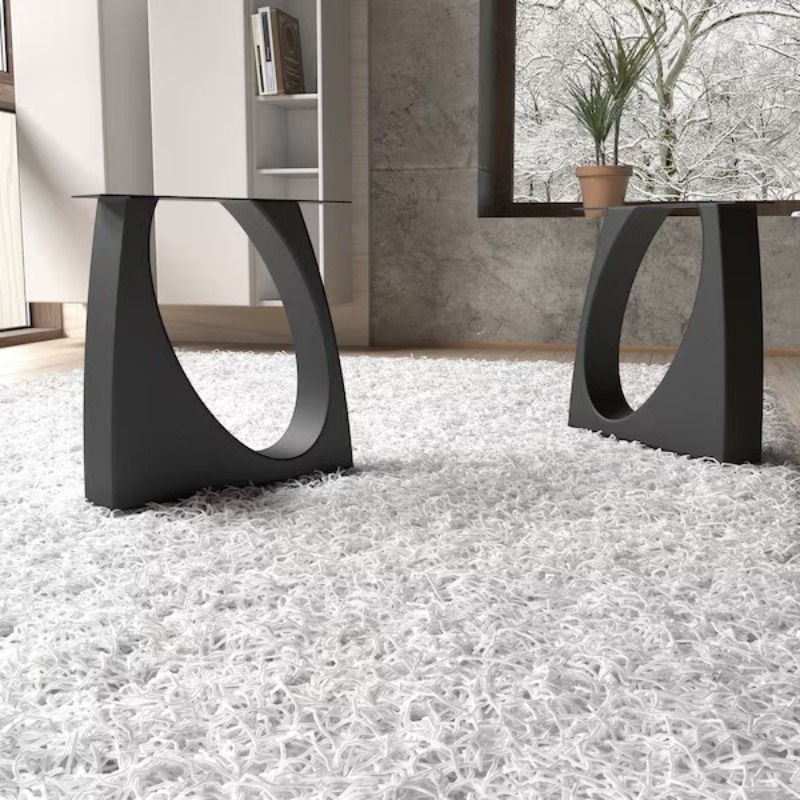
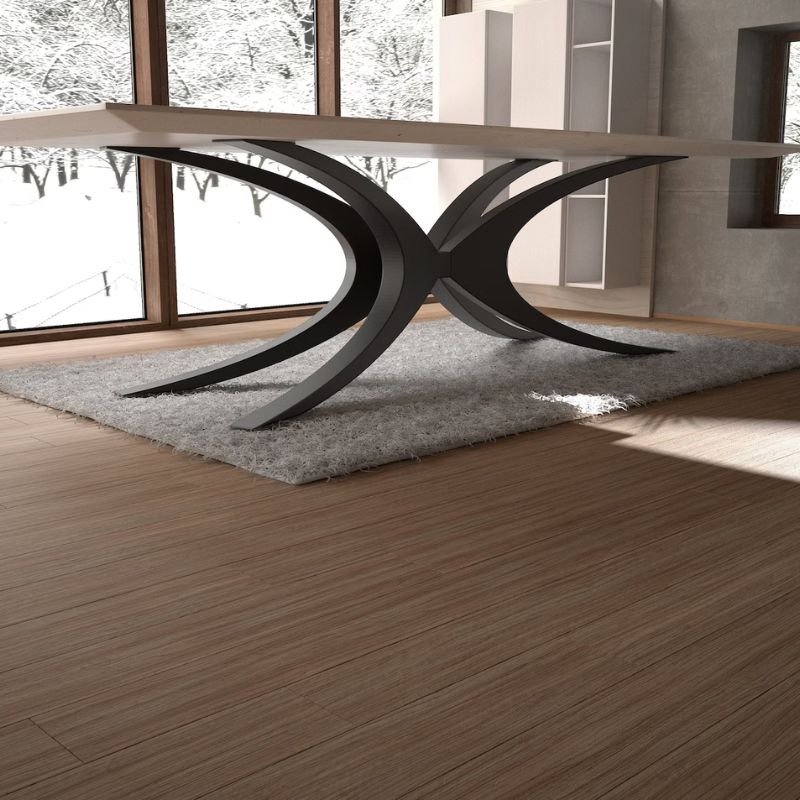
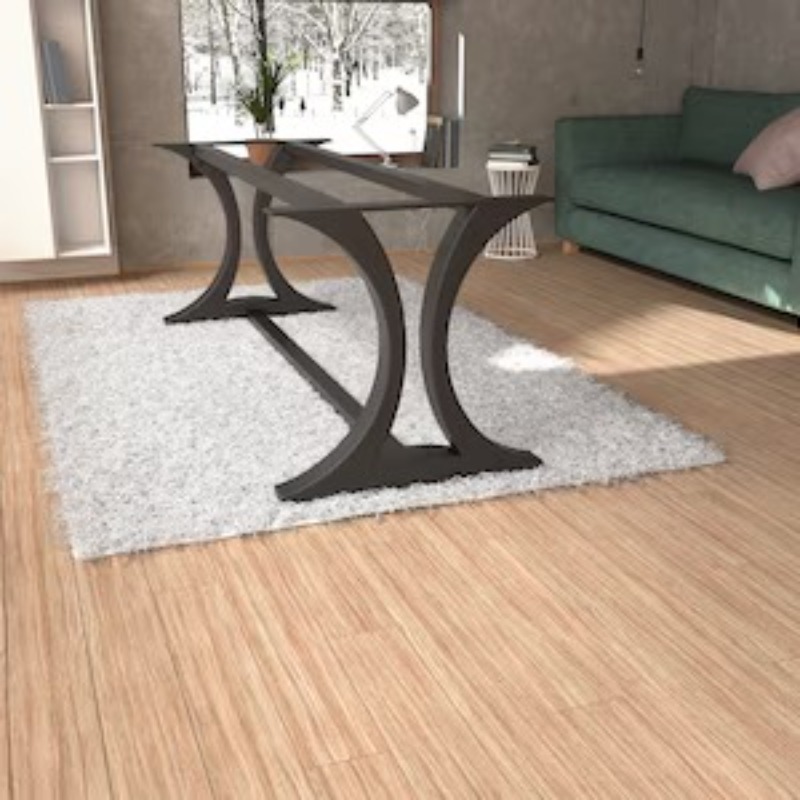
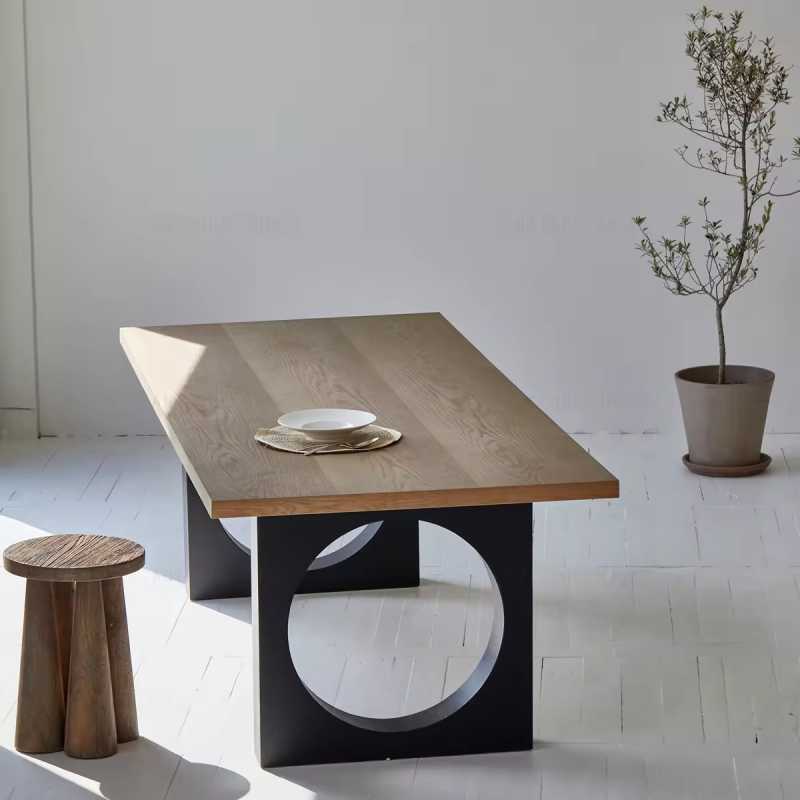
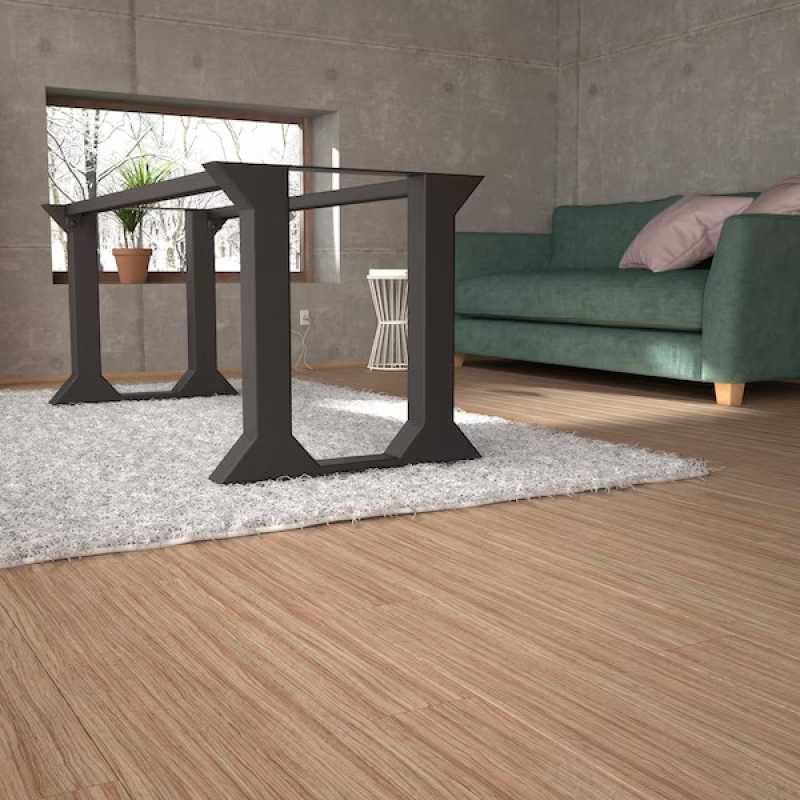
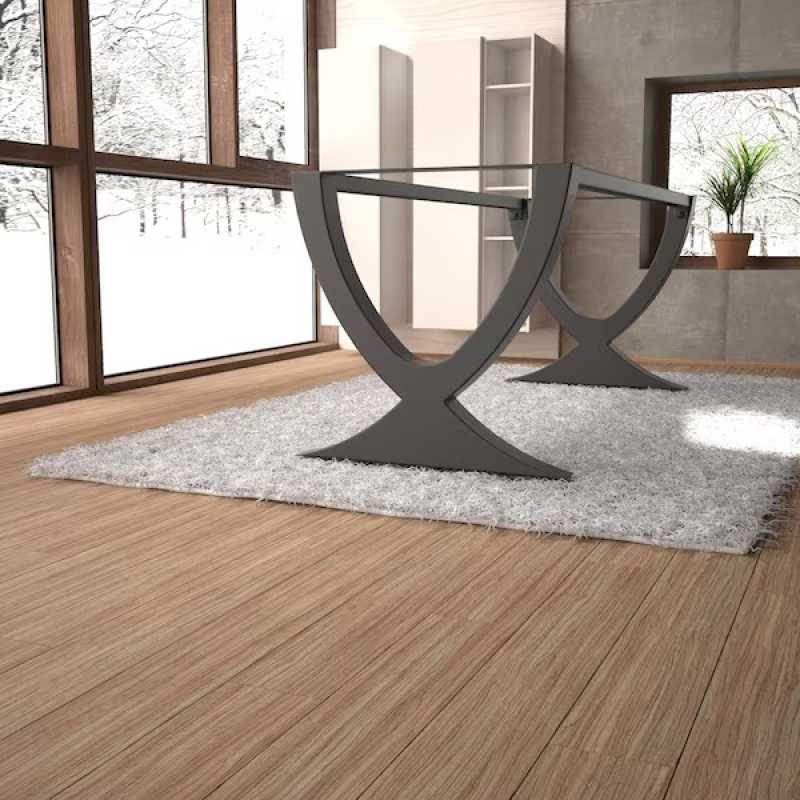
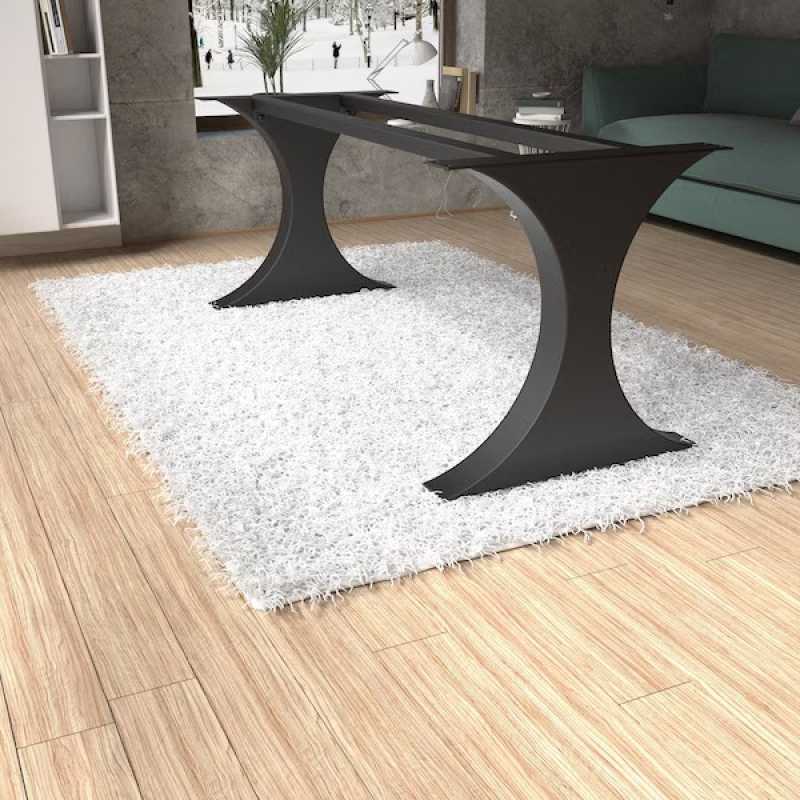
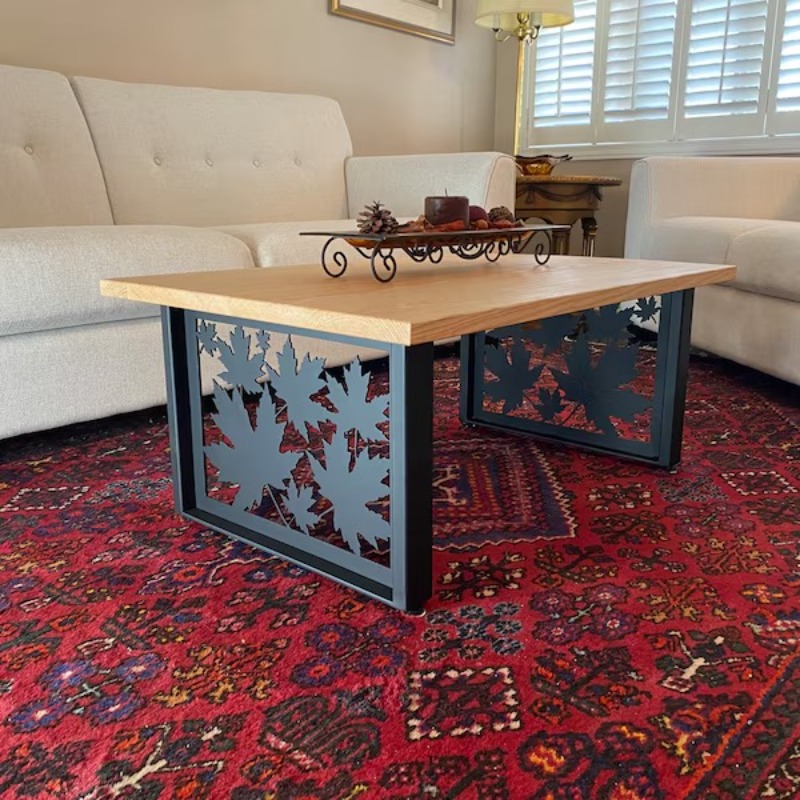
Shop metal table legs and table bases online in India at Woodensure. Prices currently range from approximately ₹21,000 to ₹35,500, depending on the size, shape and design. Explore handcrafted bases for dining tables, office desks, coffee tables, consoles and custom tabletops, including options suitable for solid wood, live-edge and epoxy resin tops.
Sort By :
The base of a table affects more than its appearance. It also influences stability, seating comfort, legroom and how well the tabletop is supported.
Woodensure offers metal table legs and complete table bases for dining areas, workspaces, living rooms and custom furniture projects. The collection includes simple geometric frames as well as decorative statement bases that can become a visible part of the table’s design.
Many of our bases are made using mild steel and finished with a powder-coated surface. Depending on the dimensions and structure, they can be paired with solid wood, live-edge and epoxy resin tabletops.
Before selecting a metal base, consider the size, thickness and approximate weight of your tabletop. You should also check the final table height, mounting plate position and space required for chairs.
Different tables require different base proportions. A dining table needs comfortable chair clearance, while a desk needs open legroom and a coffee table requires a lower structure.
Dining table legs should provide balanced support without restricting chair placement or knee space. X-frame, trapezoid, arch-shaped and pedestal bases can work well for rectangular dining tabletops.
For a four-seater or six-seater table, choose the base according to the length, width, thickness and approximate weight of the top. Large solid wood and epoxy resin tops generally need a wider mounting area and better weight distribution than lightweight tops.
The finished dining-table height is usually around 28 to 30 inches, including the tabletop thickness.
You can explore Woodensure’s complete range of dining tables to see how different metal-base styles look with rectangular, round, live-edge and resin tabletops. Buyers who also need seating can compare complete dining table sets with chairs and benches.
For more help with table size, shape, seating and material selection, read our Complete Dining Table Buying Guide 2026.
Metal desk legs are suitable for home offices, study areas, workstations, meeting tables and executive desks. U-shaped and C-shaped designs can provide a clean appearance while keeping the area below the table relatively open.
Before ordering, consider monitor placement, cable management, drawer units and the amount of legroom required. The base should be wide enough to support the top without making the workspace feel crowded.
The common finished height for an office or study table is approximately 28 to 30 inches. Explore our office and study table collection for examples of metal frames paired with solid wood, live-edge and epoxy work surfaces.
Coffee and center tables require shorter metal legs and balanced proportions. A base that looks suitable under a dining table may appear too large or visually heavy below a compact coffee-table top.
Round pedestal, curved and geometric bases can be paired with wooden or epoxy tops to create a statement piece for the living room. The usual finished coffee-table height is around 16 to 18 inches, although the ideal height also depends on the height of your sofa seat.
Browse coffee and center tables to compare compact, round, oval, rectangular and sculptural designs before deciding the proportions of your custom base.
Console tables are usually narrow and placed against a wall, behind a sofa or in an entryway. Their bases should provide support without extending too far into the walking area.
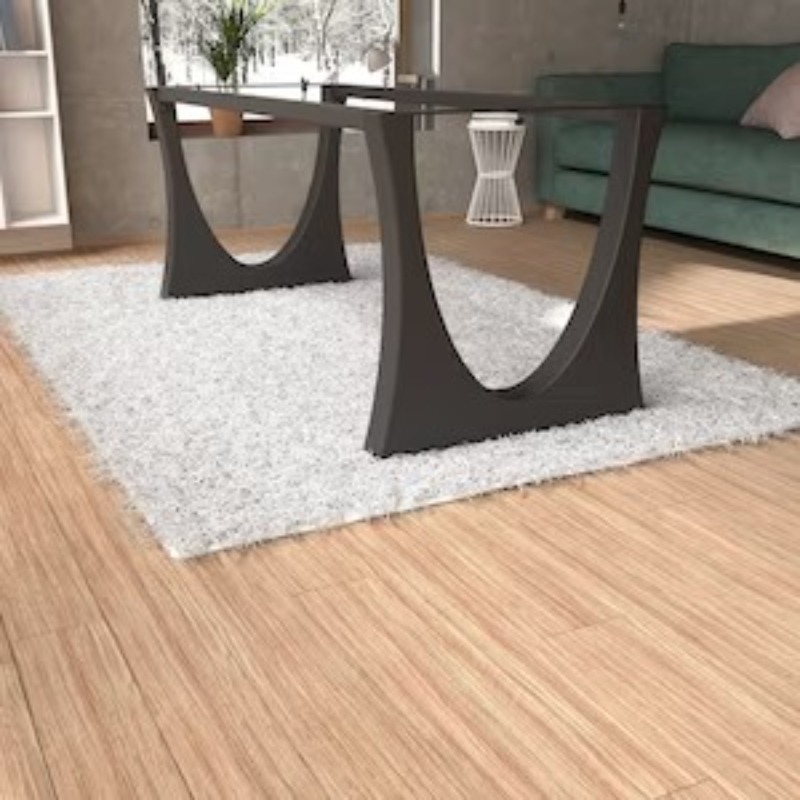
Slim arch-shaped, curved and artistic bases work well for console tables because the structure remains visible and becomes part of the overall design. Always match the base depth with the narrower width of the tabletop.
Explore our console table collection for ideas suitable for entryways, living rooms, hallways and spaces behind sofas.
Large conference and boardroom tabletops require careful weight distribution. A small decorative base may look attractive but may not provide sufficient support for a long or heavy top.
For large custom tables, dual-pedestal bases, wide metal frames or specially designed heavy-duty structures are usually more appropriate. Share the exact dimensions, thickness, material and approximate weight of the top before placing an order.
For non-standard dimensions or business requirements, submit your details through Woodensure’s custom furniture service.
The shape of a metal table base affects the furniture style as well as its seating clearance and support.
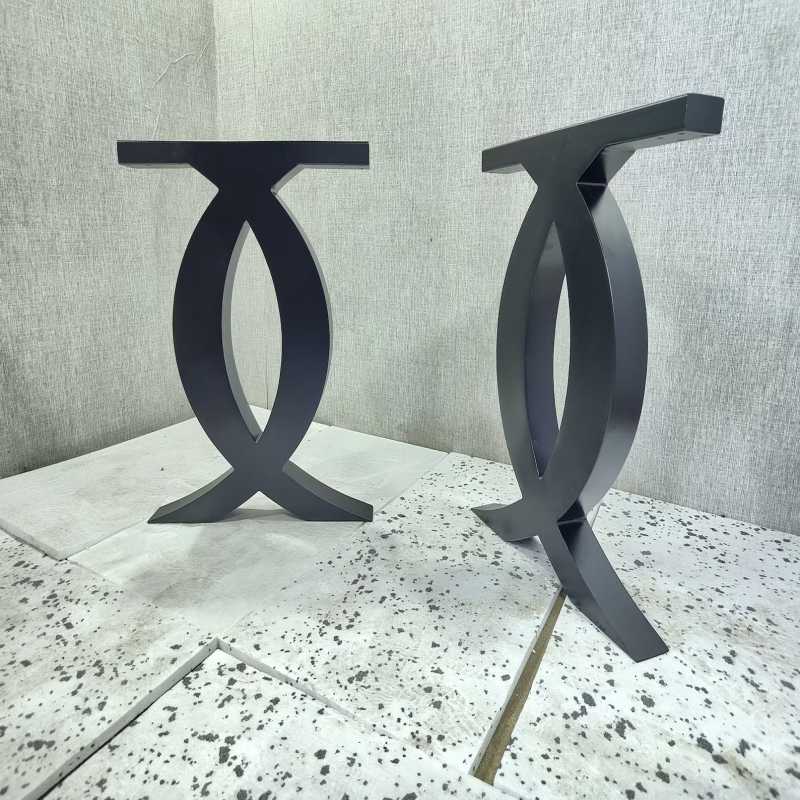
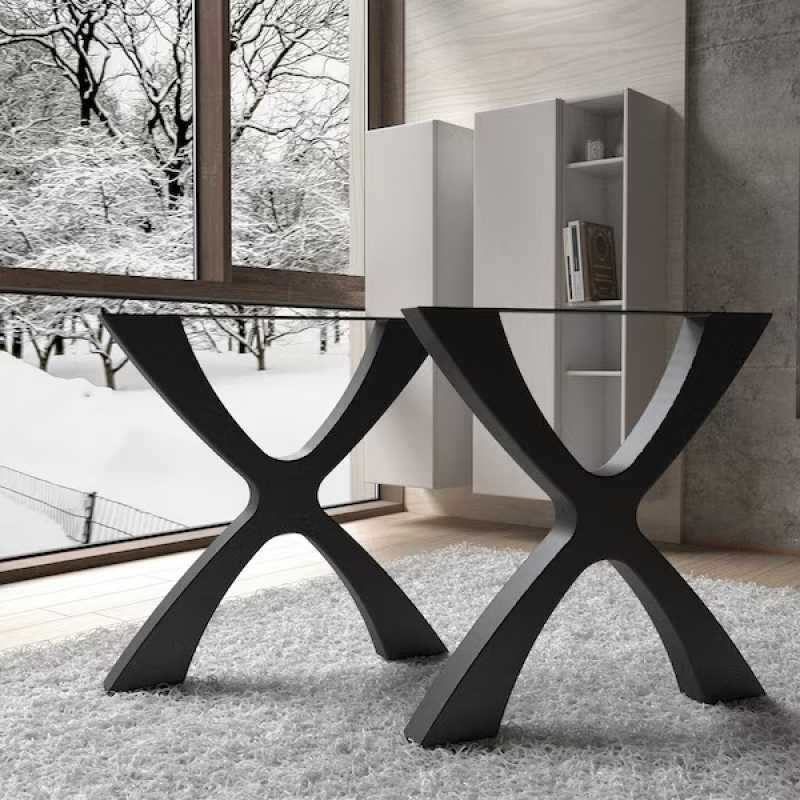
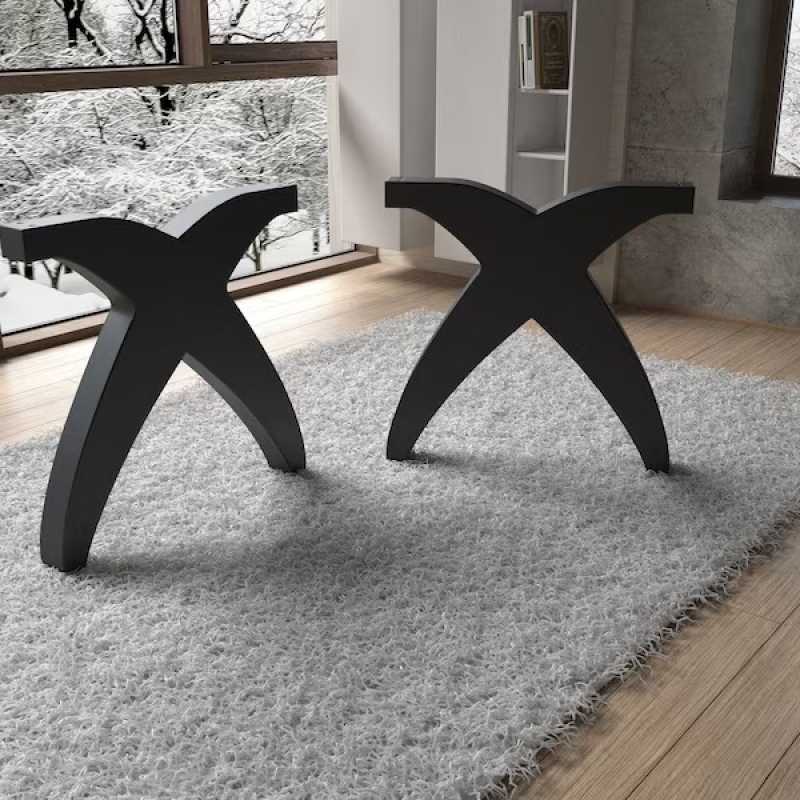
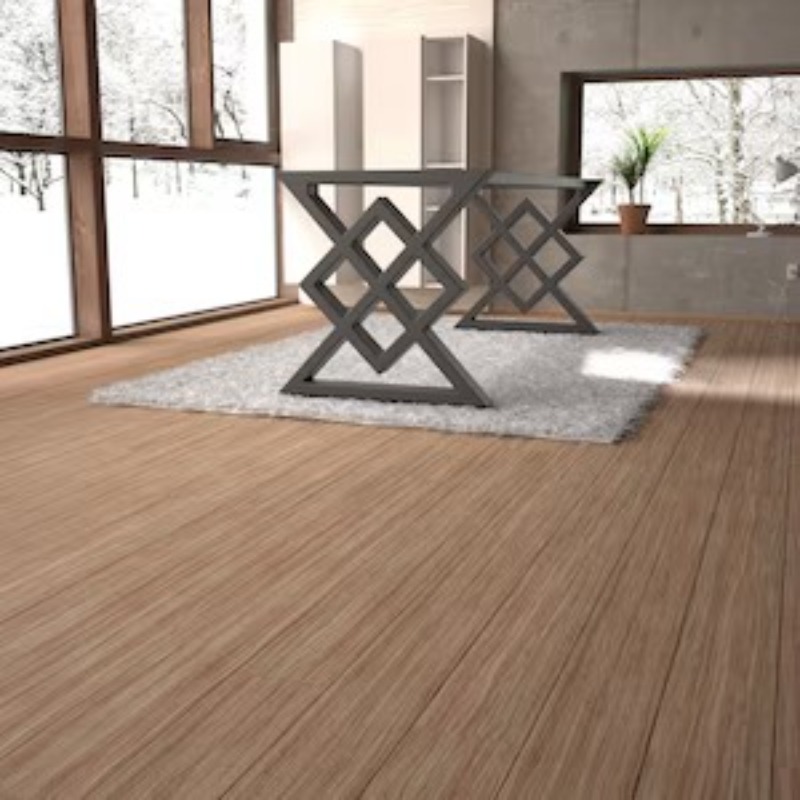
X-frame metal legs create a strong industrial and contemporary appearance. They work especially well with rectangular solid wood, live-edge and epoxy dining-table tops.
Because the frames angle or cross towards the centre, check their position carefully. A base placed too close to the ends may interfere with the legs of people sitting at the head of the table.
X-frame designs are generally suitable for buyers who want the base to remain visible and become part of the table’s overall character.
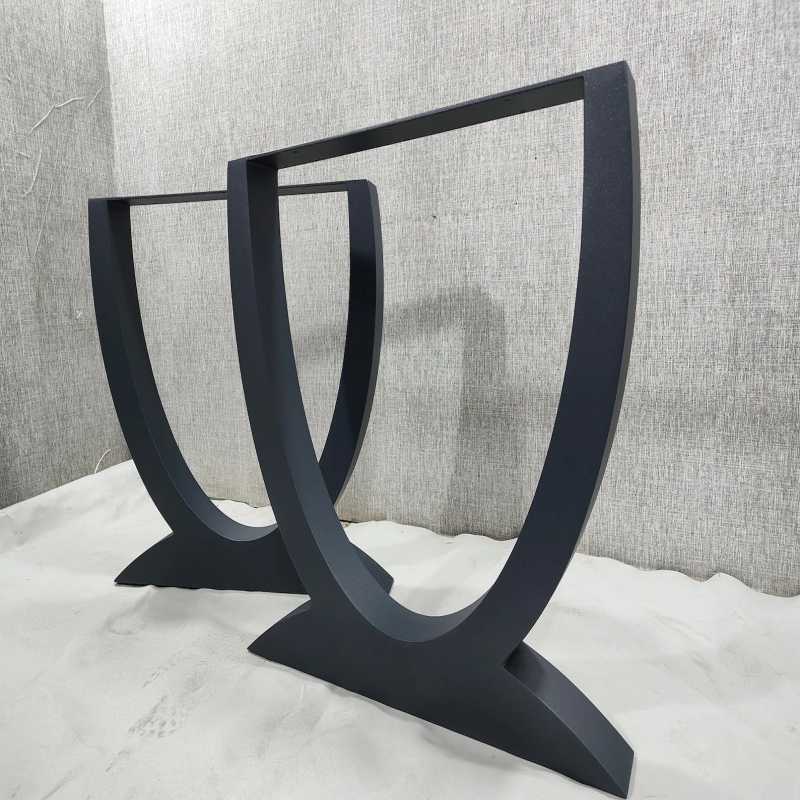
U-shaped table legs provide a simple and balanced appearance. They are commonly used for dining tables, work desks and study tables.
C-shaped frames can create a lighter visual effect and may provide easier access from one side, depending on the structure. Both designs work well in modern, industrial and minimal interiors.
These bases are also easier to pair with rectangular tops because their clean geometry does not compete with the natural wood grain or epoxy details.
Trapezoid metal legs offer a wider appearance at the mounting area and a clean geometric form below the tabletop. They are suitable for contemporary dining tables, office desks and large rectangular tops.
The angled structure adds visual interest without appearing overly decorative. Before choosing this style, check the lower width of the frame and make sure it leaves enough room for chairs and movement around the table.
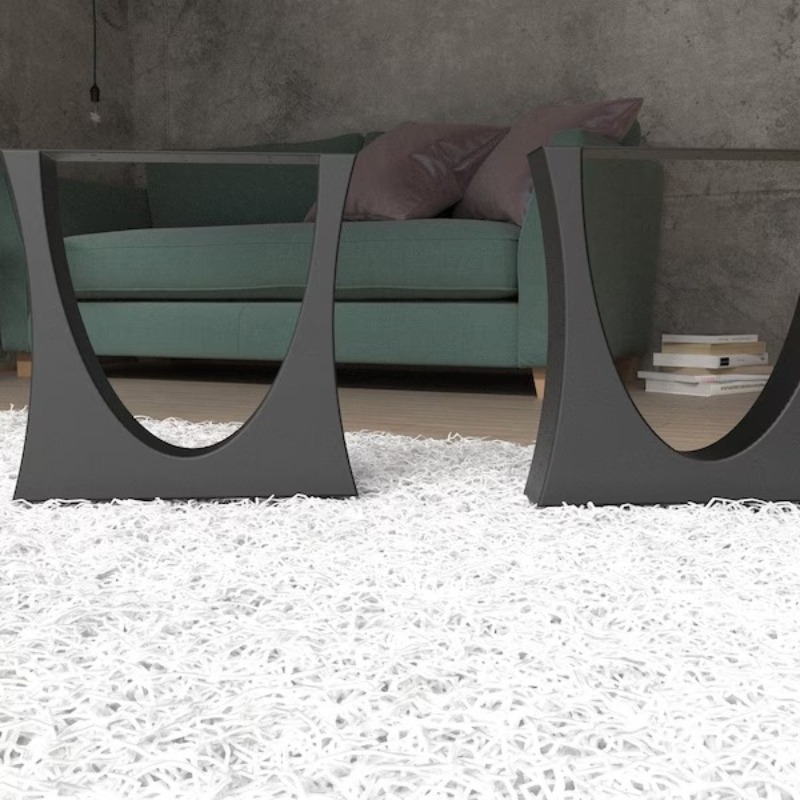
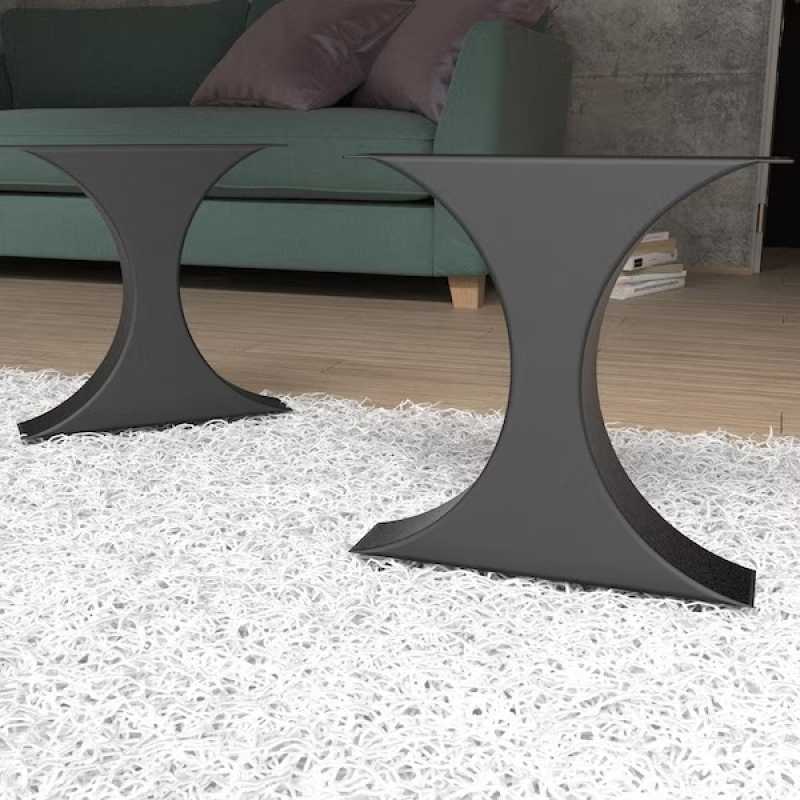
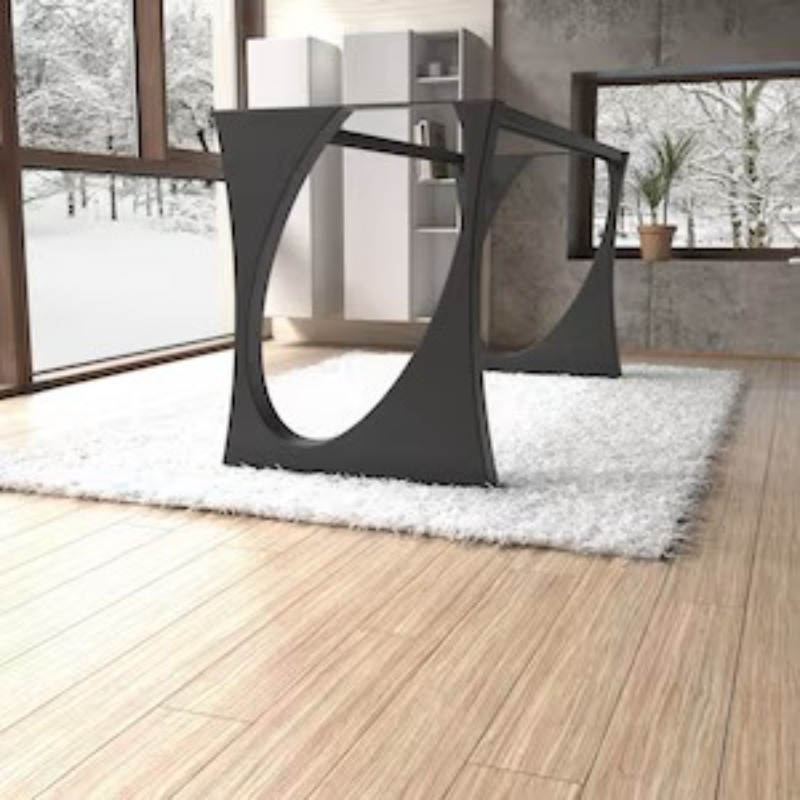
Curved and arch-shaped table bases are suitable for interiors where the base is intended to be seen rather than hidden.
They can be used below dining tables, consoles, meeting tables and statement furniture. These designs work particularly well with natural wood because the smooth metal curves create contrast with organic grains and irregular edges.
A curved base should still provide a flat and suitably sized mounting surface below the tabletop.
A pedestal base supports the tabletop from the centre instead of using four outer legs. This can provide more flexibility when placing chairs around round and square tables.
Pedestal designs are also useful when buyers want to avoid legs at each corner. However, the size and weight of the tabletop must still be considered.
Large tabletops may need a wider pedestal, a larger floor plate or more than one central support to maintain balanced weight distribution.
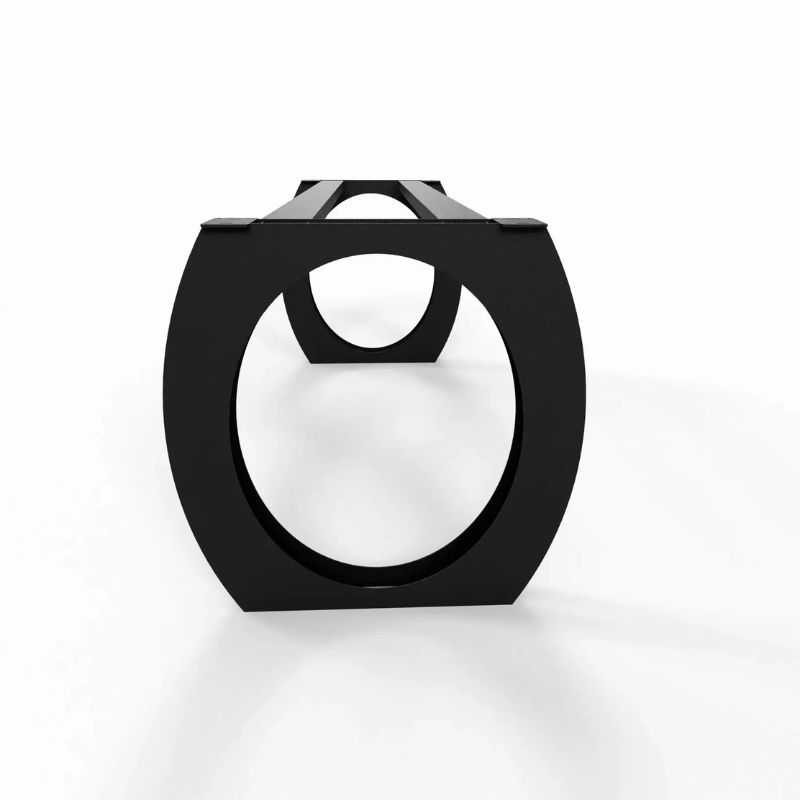
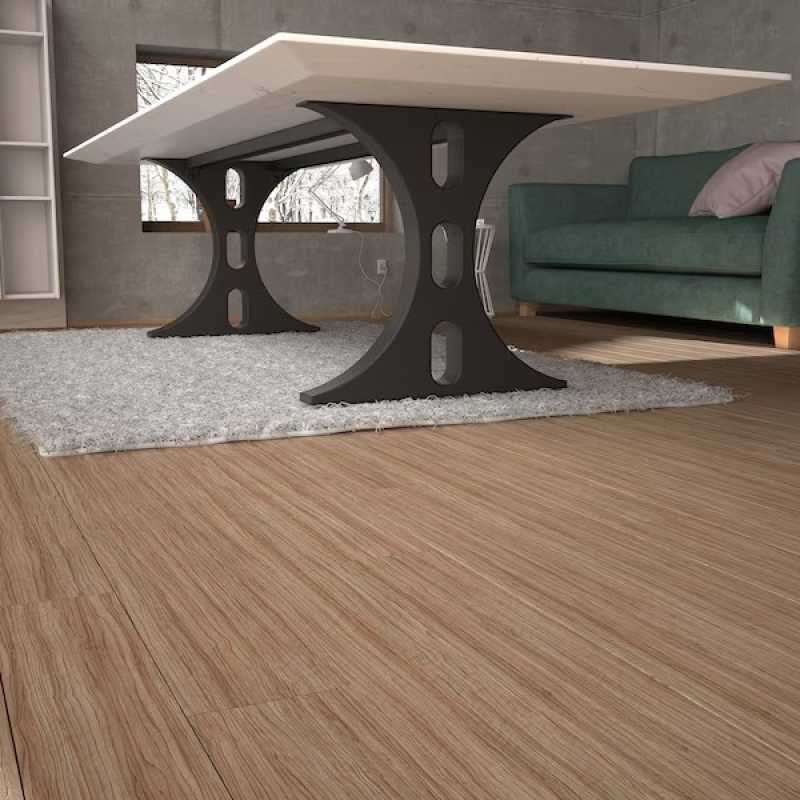
Designer metal bases use cut-outs, intersecting frames, curves and sculptural forms to create distinctive tables. They are suitable for premium dining spaces, executive offices, entryways and customised furniture projects.
When selecting an artistic base, consider both appearance and everyday practicality. The design should provide enough space for chairs, knees and natural movement around the table.
A visually complex base should not make the furniture difficult to use.
The same metal base may perform differently with different tabletop materials. Weight, thickness, mounting requirements and natural material movement should all be considered.
Solid wood tabletops can be heavy, especially when made using thick slabs. Choose a metal base with an adequate mounting area and balanced support across the length and width of the top.
The installation screws should be suitable for the tabletop thickness. They should not be long enough to pass through the upper surface.
Natural wood can also expand and contract slightly when temperature and humidity change. The mounting method should allow for normal wood movement where required.
Explore Woodensure’s solid wood dining tables to understand how different leg shapes pair with natural wooden tops.
A live-edge tabletop has an irregular natural outline. The base should therefore be positioned according to the usable width of the slab rather than only its widest outer point.
Simple geometric legs can balance the natural character of a live-edge top. Decorative bases can also be used, but the tabletop and base should not compete visually with one another.
See our live-edge dining table collection for examples of natural-edge slabs paired with metal structures.
Epoxy resin tops often combine resin with solid wood and may be heavier than they appear. They require a stable base with proper load distribution and an adequately sized mounting area.
A black powder-coated base can pair well with clear, black, blue or coloured resin designs. Before ordering, share the complete top dimensions and approximate weight to confirm whether the selected base is suitable.
Browse epoxy resin dining tables to compare metal-base shapes with river, minimal-line and decorative resin tops.
You can also read our detailed comparison of epoxy resin furniture vs solid wood furniture before choosing the material for your tabletop.
Choosing a table base only by appearance can lead to problems with height, stability, overhang or seating space. Use the following steps before placing your order.
Measure the complete length and width of the tabletop. The base should be wide enough to provide support but positioned inward enough to maintain a balanced overhang.
For dining tables, the end overhang should also leave enough room for anyone seated at the head of the table.
Do not calculate the base size using only photographs. Record the measurements in inches or millimetres and share them with the manufacturer.
A thicker tabletop is not always lighter or easier to support. Solid wood slabs, epoxy resin tops and large conference tops can be considerably heavy.
The base design, metal profile, mounting plate and welded structure should all be suitable for the expected load. Do not judge strength only by how thick the legs appear in a product image.
When the exact weight is not available, share the tabletop material, dimensions and thickness so that the structure can be assessed more accurately.
The final table height includes both the metal base and the tabletop thickness.
| Table use | Common finished height |
|---|---|
| Dining table | Approximately 28–30 inches |
| Office or study desk | Approximately 28–30 inches |
| Coffee or center table | Approximately 16–18 inches |
| Console table | Approximately 28–34 inches |
For example, if you want a finished dining-table height of 30 inches and the tabletop is 2 inches thick, the metal base should be approximately 28 inches high.
These are general guidelines. The most comfortable height may vary according to the chair, intended use and customer preference.
Check where the metal frame will sit in relation to the chairs. A wide X-frame or inward-facing support may affect the legroom of people seated near the ends.
Pedestal bases can offer flexible chair placement, while two end frames may provide a more open area through the centre. The better choice depends on the shape of the tabletop and the planned seating arrangement.
Mark the frame position below the tabletop before installation to confirm that chairs can be placed comfortably.
The mounting plate connects the metal base to the underside of the tabletop. Check its width, length, hole positions and distance from the tabletop edge.
The plate should sit flat against the lower surface. You should also confirm whether screws and installation hardware are included with the selected product.
For large, thick or unusually heavy tops, professional installation is recommended.
The following table provides a general starting point. The final base should always be selected according to the actual tabletop weight, thickness, material and intended use.
| Approximate tabletop size | Suggested use | Suitable base style | Support approach |
|---|---|---|---|
| 3–4 ft | Desk, side table or compact coffee table | U-shape, C-shape or compact pedestal | Pair of frames or central base |
| 4–6 ft | Four- or six-seater dining table | X-frame, arch or trapezoid | Two-base support |
| 6–8 ft | Six- or eight-seater dining table | Wide X-frame or dual pedestal | Heavy-duty dual support |
| Above 8 ft | Conference or large custom table | Custom frame or dual pedestal | Individual assessment recommended |
These suggestions are not load-capacity guarantees. Share your tabletop details with the Woodensure team when ordering a base for a thick, oversized or unusually heavy top.
Mild steel is commonly used for table bases because it can be cut, shaped and welded into a wide range of practical and decorative designs.
A well-made table base should have clean welds, balanced geometry and a mounting plate that sits properly against the underside of the top. The structure should not rock or twist when placed on an even floor.
Powder coating adds a finished surface to the metal and helps protect it during normal indoor use. Black finishes are popular because they work well with natural wood, epoxy resin and modern interior colours.
Before selecting a base, check:
Metal table legs at Woodensure currently range from approximately ₹21,000 to ₹35,500. The final price depends on the design, dimensions, metal usage, finishing process and manufacturing complexity.
A simple geometric frame may cost less than a curved, cut-out or sculptural base. Larger structures also require more metal, fabrication work, protective packaging and handling during transportation.
The main pricing factors include:
Before comparing two products only by price, check whether each listing is for one leg, a pair of legs or a complete table base.
A standard base may not suit every solid wood slab, epoxy top or customised furniture project. Woodensure can assist buyers who need a different size, shape, finish or support structure.
To discuss a custom requirement, share:
Clear measurements help the team recommend a more suitable structure and reduce the risk of ordering a base that is too narrow, too high or visually unbalanced.
Have a non-standard tabletop? Request a custom furniture quote or contact the Woodensure team with your measurements and reference images.
Woodensure’s furniture is handcrafted in Udaipur, Rajasthan. The collection includes practical geometric structures as well as decorative bases for statement tables.
Metal table bases can be used for dining tables, work desks, consoles, coffee tables, meeting tables and customised tops.
Depending on their design and dimensions, they can be paired with solid wood, live-edge and epoxy resin surfaces.
The collection includes X-frame, U-shaped, C-shaped, trapezoid, pedestal, curved, arch-shaped and artistic metal-base designs.
This allows buyers to choose a structure according to their room style, tabletop shape, seating plan and preferred visual appearance.
Buyers working with oversized or non-standard tops can share their dimensions and design requirements before ordering.
Customisation is particularly useful when the tabletop has an unusual shape, greater thickness or substantial weight.
Furniture is a considered purchase, especially when ordering a customised or high-value table base. Buyers can read verified experiences on the Woodensure reviews page before making a decision.
For size, mounting or compatibility questions, contact the support team before placing the order.
Woodensure provides delivery across India, subject to product availability, manufacturing requirements and serviceability at the destination.
Read the current shipping and delivery policy for information about timelines, dispatch and delivery conditions.
Metal table legs require simple but regular care.
Clean the surface using a soft, dry cloth. For marks or dust buildup, use a slightly damp cloth and wipe the surface dry immediately afterwards.
Avoid harsh chemicals, abrasive pads and rough metal brushes, as they may damage the finish. Do not allow water to remain on the metal for long periods.
Check the mounting screws occasionally, especially when the table is moved frequently. Tighten loose hardware carefully without damaging the wooden top.
Use floor protectors below the base where required to reduce scratches on marble, tile, laminate and wooden flooring.
If the powder-coated surface becomes deeply scratched or chipped, have the exposed area inspected and repaired before corrosion develops.
Metal table legs at Woodensure currently cost approximately ₹21,000 to ₹35,500. Prices vary according to the dimensions, metal usage, shape, fabrication complexity and finish.
X-frame, trapezoid, arch and dual-pedestal bases are commonly used with solid wood dining tables. The correct option depends on the tabletop’s length, width, thickness, shape and approximate weight.
A dining table usually has a finished height of approximately 28 to 30 inches. Subtract the tabletop thickness from your preferred finished height to calculate the required base height.
Measure the tabletop’s length, width, thickness and approximate weight. Choose a base that provides balanced support while maintaining suitable overhang, chair space and knee clearance.
Yes, metal table legs can support live-edge and epoxy resin tops when the base dimensions, mounting structure and construction are suitable for the tabletop. Heavy or oversized tops may require a wider or customised support system.
An X-frame creates a bold geometric appearance and works well with rectangular tops. A pedestal base may provide more flexible chair placement. The better option depends on the table shape, size and seating arrangement.
This may differ by product. Check the individual listing to confirm whether the displayed price includes one leg, a pair of legs or the complete base structure.
Hardware inclusion may vary by design. Check the product description or contact the Woodensure team before ordering to confirm the mounting plate, screws and installation requirements.
Custom size and design assistance may be available for selected requirements. Share your tabletop dimensions, material, thickness, approximate weight, preferred base shape and required finished height.
Woodensure provides delivery across India, subject to product availability and destination serviceability. Manufacturing and delivery timelines may vary for customised or made-to-order bases.
This data was last updated on July 19, 2026