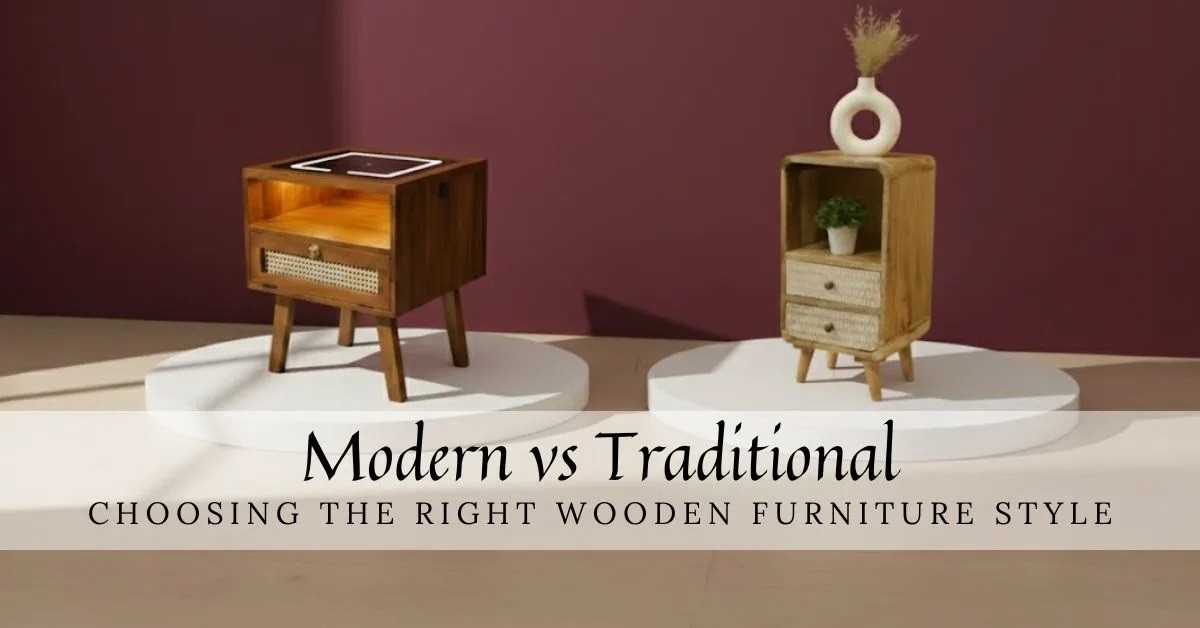
Modern vs Traditional: Choosing the Right Wooden Furniture Style
Wooden furniture has always been the heart of interior design — it carries warmth, authenticity, and timeless appeal. Yet, as home design trends evolve, homeowners often find themselves caught between two defining aesthetics: Modern Furniture and Traditional Furniture.
Each style tells a story. Modern Furniture reflects simplicity, functionality, and sleek design — ideal for minimal, contemporary homes. On the other hand, Traditional Furniture celebrates craftsmanship, heritage, and intricate detailing that never goes out of style.
If you’re setting up your new home or planning a makeover, understanding the key contrasts between Traditional or Modern Furniture can help you make design choices that complement your personality and lifestyle. In this comprehensive guide, we’ll explore the features, advantages, and aesthetic appeal of both styles — and help you discover which one truly fits your space best.
Understanding Modern Wooden Furniture
Modern Wooden Furniture represents the design philosophy that values minimalism, practicality, and innovation. Emerging in the mid-20th century, this style focuses on clean lines, smooth surfaces, and neutral tones that make spaces feel open and clutter-free.
Core Characteristics
- Minimal Detailing: Designs are simple yet sophisticated — without ornate carvings or excessive embellishments.
- Material Harmony: Combines wood with metal, glass, or epoxy to create a balance between natural and industrial aesthetics.
- Neutral Color Palette: Shades like white, beige, grey, and black dominate modern interiors.
- Functional Design: Every piece serves a purpose — from adjustable tables to compact wooden furniture for living rooms.
- Light & Space-Oriented: Modern layouts favor airy, well-lit environments that make smaller homes feel spacious.
Why Modern Furniture Fits Today’s Lifestyle
Modern homes demand flexibility and efficiency. For instance, a modern wooden furniture setup can easily adapt to compact apartments or open-plan offices. Adjustable work tables, floating shelves, and modular storage solutions fit perfectly within this aesthetic.
WoodEnsure emphasises this functionality through solid wood adjustable tables, epoxy river desks, and minimalist wooden stands — proving that practicality can coexist with beauty.
Exploring the Charm of Traditional Wooden Furniture
Traditional Furniture, on the other hand, embodies timeless elegance, cultural heritage, and detailed craftsmanship. Rooted in history, this design style draws inspiration from classic furniture traditions of Indian, European, and Victorian interiors.
Core Characteristics
- Detailed Carvings: Floral motifs, scrolls, and ornamental edges reflect exceptional handcraftsmanship.
- Rich Wood Finishes: Dark tones like mahogany, teak, and walnut dominate the palette.
- Luxury Appeal: Heavier structures and glossy finishes add grandeur to any interior.
- Durability & Longevity: Traditional wooden furniture is built to last generations — often passed down as heirlooms.
Why Traditional Furniture Still Reigns Supreme
Despite modern trends, traditional wooden furniture remains irreplaceable for luxury homeowners. It evokes a sense of stability, warmth, and artistry that machine-made pieces can’t replicate. Whether it’s a solid Sheesham dining table or a carved teak console, the charm lies in the details and the craftsmanship.
This style suits large spaces such as villas, bungalows, or heritage-inspired interiors where each furniture piece acts as a statement.
Modern vs. Traditional Furniture: A Detailed Comparison
Let’s decode the modern vs traditional furniture contrast to understand their unique qualities better.
| Aspect | Modern Wooden Furniture | Traditional Wooden Furniture |
| Design Philosophy | Minimalist, clean lines | Ornate, intricate craftsmanship |
| Color Palette | Neutral, monochrome | Warm, rich, deep tones |
| Material Use | Wood mixed with glass/metal/epoxy | Pure solid wood (Sheesham, Teak, Acacia) |
| Functionality | Multi-purpose, space-saving | Decorative, luxurious |
| Aesthetic Mood | Sleek, modern, light | Royal, cultural, heavy |
| Ideal For | Apartments, offices, contemporary homes | Villas, traditional and classic interiors |
Evolution of Wooden Furniture Styles
The beauty of wooden furniture lies in its ability to evolve while maintaining timeless appeal. Over the decades, furniture design has transitioned from pure craftsmanship to functional artistry.
- Classic Era: Heavy designs, carved legs, rich varnish, and royal tones dominated.
- Mid-Century Modern: Minimal forms, geometric shapes, and light wood finishes emerged.
- Contemporary Fusion: A blend of old-world charm with modern innovation — think a traditional carved headboard on a minimalist frame.
This evolution showcases how types of wooden furniture have diversified — from traditional handcrafted pieces to hybrid models that merge both aesthetics seamlessly.
Why Modern vs. Classic Furniture Debate Matters
The debate between Modern vs. Classic Furniture is not just about looks — it’s about lifestyle. Modern furniture complements fast-paced, space-efficient living, while classic designs cater to comfort and legacy.
- If you value simplicity, space, and light, go for modern wooden furniture.
- If you appreciate ornamentation, nostalgia, and richness, traditional furniture will suit you better.
However, interior design today is fluid — and many homeowners prefer a fusion of both. A sleek modern table paired with classic wooden chairs creates a timeless contrast that feels both stylish and warm.
Choosing Wooden Furniture for the Living Room
The living room is where your furniture style truly shines. Whether you choose modern or traditional, wooden furniture defines the room’s personality.
Modern Wooden Furniture for Living Rooms
- Low-profile coffee tables with epoxy resin tops.
- Floating shelves or console tables with metal accents.
- Neutral-colored TV units and modular sideboards.
- Lightweight lounge chairs with simple wooden legs.
Traditional Wooden Furniture for Living Rooms
- Heavily carved center tables and sideboards.
- Rich walnut or Sheesham wooden cabinets.
- Ornate chairs and classic dining tables.
- Glossy finishes and heritage-inspired designs.
Mixing both can also create visual harmony — for instance, pairing a traditional acacia wood center table with modern lighting and neutral walls.
Blending Traditional and Modern Wooden Furniture Styles
Interior experts increasingly recommend blending both aesthetics to achieve a balanced, timeless look. This “transitional” design approach merges modern simplicity with traditional warmth.
How to Achieve It
- Use a modern layout with a classic statement piece (like a carved console).
- Choose solid wood furniture with minimal metal detailing.
- Mix textures and finishes — matte modern surfaces with glossy traditional ones.
- Maintain a consistent color palette to ensure visual balance.
The result? A sophisticated home interior that feels current yet connected to heritage.
Expert Tips for Choosing Between Modern and Traditional Wooden Furniture
Assess Your Space:
Compact spaces benefit from modern designs, while larger rooms can handle the grandeur of traditional furniture
Understand Your Lifestyle:
If you move frequently or prefer low-maintenance designs, modern furniture works best. Traditional pieces are ideal for settled homes and statement interiors.
Define Your Mood:
- Modern = calm, minimal, and airy.
- Traditional = rich, cozy, and detailed.
Mix Wisely:
It’s perfectly fine to combine both — just maintain proportional balance.
Think Long-Term:
Solid wood furniture, whether modern or traditional, ensures longevity and sustainability.
Sustainability in Modern and Traditional Wooden Furniture
Sustainability is now a leading factor in furniture design. Both styles have sustainable potential when built with responsibly sourced wood and durable finishes.
- Modern Wooden Furniture: Often uses engineered methods to minimise waste and enhance durability.
- Traditional Wooden Furniture: Handcrafted and long-lasting, reducing the need for replacements.
At WoodEnsure, sustainability meets artistry — each piece is crafted using ethically sourced wood and eco-friendly finishes that preserve both beauty and nature.
Why WoodEnsure Bridges Modern and Traditional Excellence
WoodEnsure understands that every homeowner’s taste is unique. That’s why our collection combines both worlds — modern minimalism and classic craftsmanship — through customizable designs.
- Modern Furniture Range: Adjustable ergonomic tables, epoxy river desks, and sleek center tables for contemporary interiors.
- Traditional Collection: Solid wood dining sets, carved sideboards, and elegant seating designed for luxury spaces.
Each piece reflects quality, comfort, and character — handcrafted to ensure longevity and timeless design appeal.
Conclusion
Whether you’re drawn to the clean sophistication of Modern Furniture or the ornate beauty of Traditional Furniture, your choice should reflect who you are. Modern designs celebrate minimalism and functionality, while traditional furniture celebrates heritage, detail, and depth.
Ultimately, it’s not about choosing one over the other but creating a living space that resonates with your personal style. A well-designed home often finds balance — where modern simplicity meets traditional soul.
Explore handcrafted solid wood furniture that brings your dream interiors to life — only at WoodEnsure.